

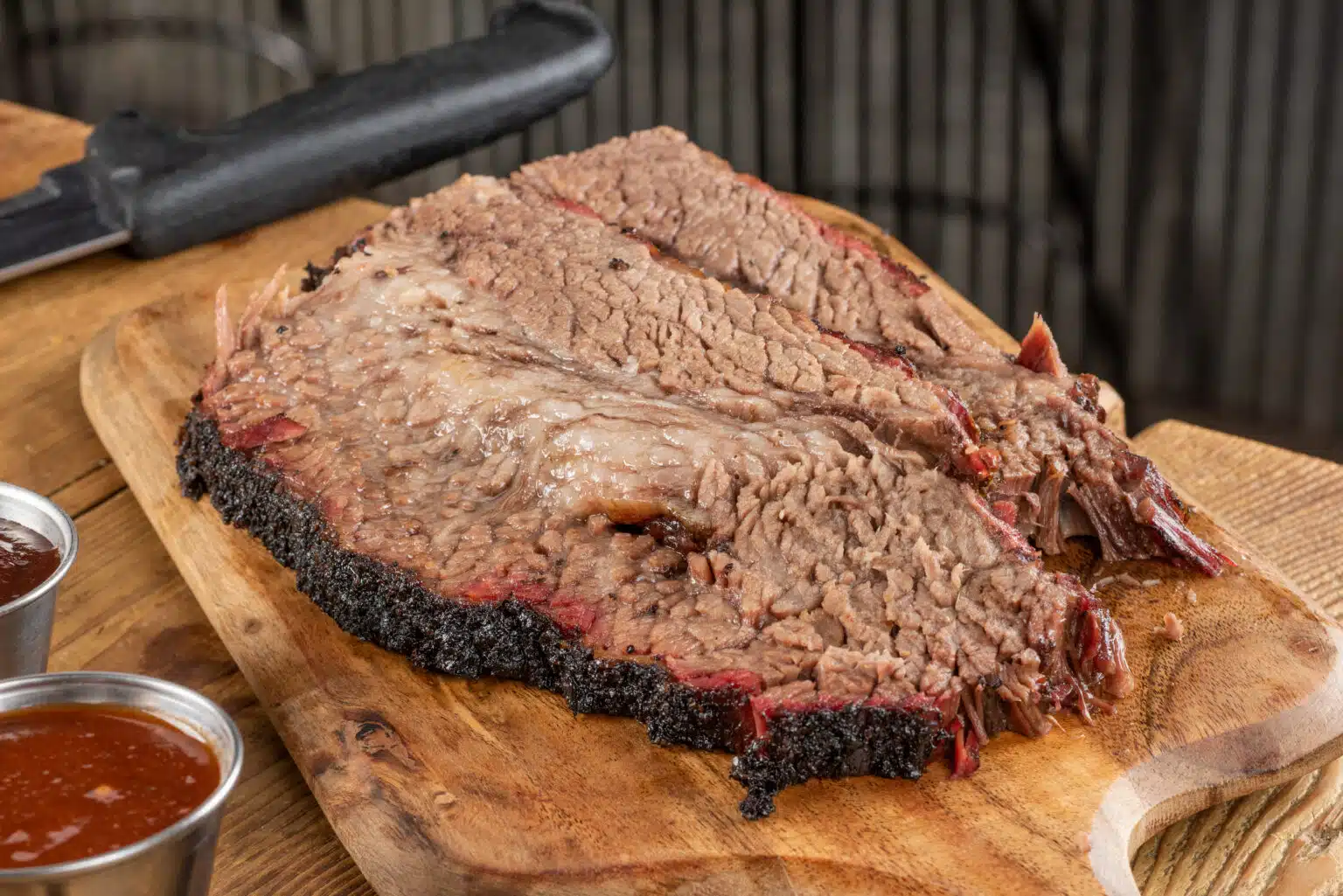
Quick Summary
- The smoke ring is a real chemical reaction — nitric oxide from burning hardwood binds to myoglobin in the meat, locking in that signature pink color just beneath the surface.
- Gas and electric smokers can’t produce a true smoke ring because they don’t generate the nitric oxide that wood combustion does.
- At Walter’s BBQ Southern Kitchen in Pittsburgh’s Lawrenceville neighborhood, every brisket is fired with hickory and oak the old way — no shortcuts, no fakes, no gas.
You slice into a brisket, and there it is — that gorgeous pink halo just under the bark. It’s the mark of a real pitmaster. But what actually is it? And why can’t you fake it?
Let’s break it down, pitmaster-to-pitmaster.
What the Smoke Ring Actually Is (The Real Chemistry)
The smoke ring isn’t dyed. It isn’t a trick of the light. It’s pure chemistry.
When hardwood burns, it produces gases — including nitric oxide (NO) and carbon monoxide (CO). These gases penetrate the surface of the meat while it’s still cool and the muscle fibers are relaxed. Once inside, the nitric oxide binds to myoglobin — the protein responsible for the red color in raw meat — and forms a stable compound called nitrosomyoglobin.
Think of it like this: myoglobin is a light switch. Heat normally flips it from red to gray (that’s why cooked meat turns brown). But when nitric oxide gets there first, it locks the switch. The result is that permanent pink ring, even after hours of cooking at 225°F.
No wood combustion? No nitric oxide. No smoke ring. It’s that simple.
Why Gas and Electric Smokers Can’t Do This
This is where a lot of backyard cooks get frustrated — and where a lot of restaurants quietly cut corners.
Gas and electric smokers don’t produce nitric oxide. They generate heat, and some use wood chips for flavor, but the combustion chemistry is fundamentally different. The smoke is thin, the gas profile is wrong, and the nitric oxide just isn’t there in meaningful quantities.
That’s why a brisket off a gas smoker can smell decent and taste okay, but when you slice it? Gray all the way through. No ring. No proof of the process.
At Walter’s, we cook on traditional hardwood offset smokers fired with hickory and oak — the same way it’s been done for generations. It’s not the fastest way. It’s not the cheap way. But it’s the only way to get that ring, and more importantly, it’s the only way to get that flavor.
The Surface Moisture Factor (The Part Most People Miss)
Here’s something you won’t find in most BBQ guides: the moisture on the meat’s surface matters as much as the wood itself.
Nitric oxide is a gas. For it to penetrate the meat, it needs to dissolve into a liquid layer on the surface first — essentially, the meat needs to be slightly damp when it hits the smoke. A dry surface creates a barrier. A moist surface acts like a sponge, pulling those smoke gases deep into the muscle.
This is why we start cold, never pre-sear, and manage our smoker’s humidity carefully. It’s also why different hardwoods produce different ring depths. Hickory burns hot and produces dense smoke with a rich nitric oxide profile. Oak burns slower and cleaner, giving the smoke time to penetrate evenly. Together, they’re the combination that’s built Walter’s reputation for some of the best BBQ and Southern food in Pittsburgh.
Does the Smoke Ring Actually Add Flavor?
Honest answer? The ring itself is mostly cosmetic.
The nitrosomyoglobin reaction doesn’t directly add flavor — it just preserves the color. What does add flavor is everything that happens around it: the smoke penetration into the meat fibers, the bark formation from the Maillard reaction, the fat rendering low-and-slow over hours of hardwood heat.
The smoke ring is the proof of the process, not the process itself. It tells you the pitmaster used real wood, maintained the right temperature, managed moisture, and didn’t rush it. When you see that pink ring on our authentic wood-fired brisket, you’re looking at 14+ hours of discipline.
That’s what you’re tasting.
How to Fake a Smoke Ring (And Why We Never Do)
You can get a pink ring without wood smoke. Curing salts — like Prague Powder or celery juice — contain nitrates and nitrites that react with myoglobin the same way nitric oxide does. Some restaurants use them to fake the visual without doing the work.
We don’t. Not because we’re gatekeeping — but because the flavor doesn’t lie. A real smoke ring comes with smoke flavor, bark, and tenderness that curing salts simply can’t replicate. When you visit our Pittsburgh barbecue smoker in Lawrenceville, you can smell the difference before you even walk through the door.
Why This Matters for Pittsburgh BBQ
Pittsburgh is a blue-collar city built on doing things right the first time. That’s not just a nice metaphor — it’s the culture we cook in.
We source our hickory and oak from Pennsylvania suppliers, fire our smokers daily, and apply traditional hardwood smoking methods that Joel and Pitmaster Chris have refined over 40+ years in the New York and Texas culinary scenes. That experience doesn’t live in a recipe card. It lives in knowing when the smoke is right, when the surface is ready, and when to leave the meat alone.
Built on tradition. That’s not a tagline. It’s the reason the smoke ring shows up every single time.
Conclusion: Skip the 14-Hour Cook. We’ve Got You.
Now you know the science. You know why wood matters, why moisture matters, and why gas smokers will always fall short. You know what to look for when you slice into a brisket — and you know exactly what it means when that pink ring is there.
If you want to try it yourself, take everything above and get cooking. We genuinely love that you’re out there doing it.
But if you’d rather skip the 14-hour Saturday and just eat the best brisket in Pittsburgh? Come find us at 4501 Butler St in Lawrenceville. Big picnic tables, cold beer, live music, and a smoke ring on every slice.
Barbecues always come with a sense of community and family attached. We’re ready to prove it.
👉 View our menu | Plan your visit | Ask about BBQ catering in Pittsburgh
Frequently Asked Questions
Does the smoke ring actually add flavor to the meat?
Not directly — the smoke ring is primarily a visual indicator of the cooking process. The pink color comes from nitrosomyoglobin, a stable compound formed when nitric oxide from burning hardwood binds to myoglobin in the meat. The flavor comes from smoke penetration, fat rendering, and bark formation — all of which happen alongside the ring, not because of it. Think of the ring as proof that the pitmaster did everything right.
Why didn’t my brisket get a smoke ring?
The most common reasons are: using a gas or electric smoker (which doesn’t produce nitric oxide), starting with meat that’s too warm (the surface needs to be cool and moist to absorb smoke gases), or not using enough real hardwood. If you’re cooking on a charcoal or offset smoker and still not seeing a ring, try starting with cold meat straight from the fridge and keeping the surface lightly moist throughout the cook.
Is a pink smoke ring safe to eat?
Absolutely. The pink color does not mean the meat is undercooked. Nitrosomyoglobin is heat-stable, which means it stays pink even when the meat has reached a safe internal temperature (195–205°F for brisket). The USDA recognizes the smoke ring as a normal result of the smoking process. If the ring is there, it means real wood was used, and the smoke did its job — it’s a feature, not a flaw.